It is AI's world. And, we are all just living in it.
Or are we?
Some people do believe that. Others have a differing opinion. So, who's got it right?
Personally, we think that artificial intelligence is here to stay, but not in the Terminator "take-over-the-world" way. More like in a revolutionary way - like the currency transition from gold coins to paper money.
And to answer the question, "Should we be worried about AI?" Let's delve a little deeper with an open mind and an even more curious mindset.
Starting With The Basics: What Is AI?
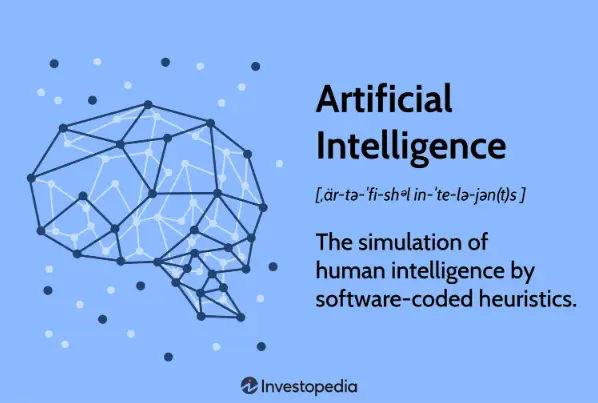
Artificial intelligence (AI) is a technology in which computers and machines perform tasks that would normally require human intelligence, like understanding language, problem solving, decision making and even creating content.
If you haven't heard about it yet, you are probably living under a rock. And if you aren't already using it, you are missing out!
AI is all around us, from the reel recommendations we get on our Instagram to the chatbots we talk with when we have a customer query. It has taken over the repetitive, boring, and autonomous work in both our personal and professional lives.
Speaking of work…With the rise of AI, where does that leave us humans in terms of employment and jobs?
The concern that artificial intelligence will replace humans in workplaces isn't entirely invalid. In fact, according to Goldman Sachs, AI could replace the equivalent of 300 million full-time jobs.
Sounds scary. Especially in areas like customer service and IT, where work is quite predictable and can be easily automated. Does that mean that these roles will be fully replaced? Yes, and no.
Some jobs done by humans might become extinct. Some jobs might have to be altered to fit in to create harmony between a human and AI to work together. Let's discuss this further.
But before that…
What Does History Say?
Take a walk with us back to the past, when people genuinely thought machines would make humans useless.
The fear isn't new. It just gets a new face every few decades.
…When horse-drawn plows got replaced with tractors. At first, people might have worried, "Where will the farmers go?"
…When electricity entered homes, candle makers didn't just lose business, they lost relevance.
…When cars replaced horses, people no longer needed carriages or coachmen.
…When the Industrial Revolution started. What was crafted by hand got replaced with huge factory machines. Labourers panicked. Jobs vanished overnight. Protests broke out. The Luddites literally destroyed machines because they believed technology was stealing their livelihoods.
History is proof that humans are ever-evolving, and with that, so is the job market. Sure, factory machines replaced many workers. But they opened up new opportunities that didn't exist before.
Someone had to design the machines. Someone had to operate them. Someone had to maintain them, fix them, improve them. And with this need, entire industries were born.
So, What Does It Teach Us?
Technology doesn't erase work. It erases outdated work.
Think about it. Today, you probably wouldn't want to send letters by pigeon or calculate numbers manually with ledgers (imagine how much of a hassle it would be!).
So, no. We didn't lose progress. We gained speed and advanced into new roles that we couldn't have imagined before. Even the internet, which we now treat like oxygen, once sparked the same panic.
"Online shopping will kill retail."
"How will we communicate through Email?"
"Google will make people lazy."
Instead, we got digital marketing, e-commerce managers, UX designers, social media careers, content creators, and SEO specialists. Jobs that literally did not exist before.
AI is following the same path.
What's different this time is speed. Artificial intelligence isn't arriving slowly. It's hurtling towards the future. And if we don't want to be left behind, we have to adapt to it just as fast.
What Will The Future Look Like?
To reiterate, not all jobs will be fully replaced by AI.
A major study by McKinsey backs that up by saying that work in the future will be a partnership between people, agents, and robots, all powered by artificial intelligence. In short:
- We will be working with AI, not just against it.
- Like technology, most roles will evolve, not vanish.
- New jobs will be created that don't exist today.
The research also noted that more than 70% of the skills that employers want are still relevant in both automatable and non-automatable work.
So when people say "AI will take all jobs", that's both inaccurate and incomplete. It's more like artificial intelligence will shift jobs, and shift the skills we need to do them.
What AI Will Be Doing To Different Jobs
Let's take a practical look at how artificial intelligence will be changing the work sector.
Jobs That Might Shrink
The roles that will be affected the most in this AI wave will be those that are repetitive and predictable, including:
- Data entry and processing
- Basic customer service tasks
- Some bookkeeping functions
- Administrative work
It's nothing personal. Just that the nature of jobs like these can be easily done by anyone.
If a task can be written as a clear step-by-step process, chances are AI can do it faster, cheaper, and without getting tired. It doesn't need breaks. It doesn't forget instructions. And it doesn't take any days off.
Jobs That Would Be Enhanced
There will also be many jobs that will still exist, with AI handling one or some parts of that task. This is probably the most notable effect that artificial intelligence will have in the workplace.
In fact, in most industries, if not all, AI will be used as a "co-worker" to increase productivity and efficiency. For example:
- Lawyers may use it for legal research and scan hundreds of documents in seconds, so they can utilize that time to focus on building strategies.
- HR could use artificial intelligence to filter out thousands of resumes, so the interviewer only has to view and select from a much smaller pool of candidates.
- Doctors might rely on AI in diagnostics and to detect things that would be invisible to the naked eye otherwise.
The reason why artificial intelligence won't be able to fully replace humans is that they still require:
- Human judgment
- Emotional intelligence
- Organic Creativity
- Decision-making
All of which AI struggles with. So, even though these LLMs can be trained to view and summarize thousands of documents, they can't make the best judgments like a human would be able to.
Jobs that Will Rise
Of course, with each technological revolution, new roles come into existence. Copy-paste that in the era of artificial intelligence. According to research, AI is expected to create around 97 million new jobs, leading to a net gain of approximately 12 million roles globally.
Here are a few job roles that we can expect will grow in popularity:
- AI safety and ethics specialists
- AI trainers
- Human-AI workflow designers
- Supervisors of AI systems
- Digital experience managers
AI and the Human Advantage
Artificial intelligence is powerful, but it's not human. It doesn't - at least not yet - feel empathy.
It doesn't care what your favorite song is, or why Titanic leaves so many in tears by the end of the movie. It can pick up on signs, sure, but it won't be able to instantly understand that you are feeling nervous or judge a situation based on context.
And in our world, this matters. A lot.
The kind of emotional intelligence, critical judgment, and fresh creativity we bring to the table, AI can't beat us on that.
So, in a world that has been affected by AI so much, being human is your competitive advantage. Literally.
So Should We Be Worried?
Here's our honest answer:
Artificial intelligence might take our jobs, but only for those who are unwilling to adapt. And we get it. It's easier said than done. But history has proven that if anything, we humans are quite an adaptable species.
All we have to do is keep up with the trends, educate ourselves about AI, learn the skills that will matter, and simply choose curiosity over fear.