When was the last time you didn't hear or read about AI in some conversation or online? If you can't remember, then welcome aboard. We are all on the same boat. Or rather, we are all caught in the waves of artificial intelligence.
It is everywhere. In your phone. Your inbox. Your Netflix recommendations. Even your daily chat. And you are interacting with it, whether directly or indirectly.
And in a world where AI tools are growing faster than job descriptions, and automation is reshaping industries, understanding artificial intelligence is necessary to keep up.
Enter this blog. It's your 101 guide to AI. So keep on reading to find out more about what this intelligent system is and the different types of artificial intelligence and tools involved.
What Do We Mean By Artificial Intelligence?
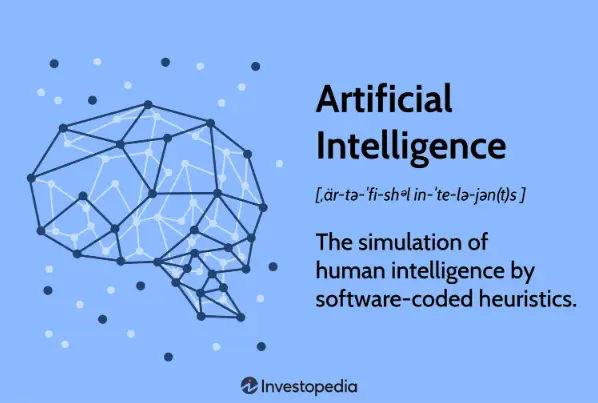
Artificial intelligence (AI) is a technology in which computers and machines perform tasks that would normally require human intelligence.
That includes:
- Understanding language
- Learning from data
- Recognizing patterns
- Making predictions
- Creating content
So take a task like writing an email, for example. You ask the AI model to type an email to your boss, and voila! You have a professional, well structured message ready to send within seconds.
All without you having to rack your brain to find the right words. That is artificial intelligence for you. And it's not magic. It's just simply data and algorithms at play.
The Rise Of Artificial Intelligence
The digital revolution took the world by storm. Then came AI, and everything got disrupted and forced us to grow right along with it.
It all began in 1950, when Alan Turing proposed machine intelligence in one of his works, which became known as the Turing Test. Six years later, John McCarthy held a workshop where he used the term "Artificial Intelligence" for the first time.
He probably would never have expected how much popularity this term would gain. AI has had significant milestones nearly every decade since then.
And with massive amounts of digital data available today, improved computing power, and advanced machine learning models (LLMs), AI is only continuing to rise.
Artificial intelligence is not just limited to professionals or IT specialists. In fact, students, marketers, and people from all walks of life are using it in their daily lives.
The Different Types Of AI
AI comes in different shapes and sizes, each designed to do different things. We've briefly described each of the six types of artificial intelligence:
1. Reactive Machines
This is the most basic type of artificial intelligence. It only responds to what is happening right now. It doesn't remember anything from the past and it doesn't learn from experience. It sees, it reacts, and that's all about it.
2. Limited Memory AI
As the name suggests, it learns from past data to do better. Like self driving cars remembering traffic patterns or a recommendation system suggesting you the next movie to watch.
It can improve over time because it "remembers" previous data and uses it to make smarter decisions.
3. Narrow AI
It is a specialized type of artificial intelligence, like Siri, Google Translate, or facial recognition models. They are great at one thing, but not much in everything else.
Meaning Siri is amazing at working as a virtual assistant, but it can't generalize or apply its knowledge to, say, editing an image.
4. Theory of Mind AI
It's still in the experimental stage, but this type of AI would be able to understand human emotions and intentions. This could be revolutionary in service industries, like customer support. It would notice if you're frustrated, happy, or confused, and respond accordingly.
5. Self Aware AI
This is the stuff of sci fi for now. It's the type that could be conscious and aware of itself. We're not there yet, but if it ever exists, it would be able to understand its own "thoughts" and make decisions independently, like an actual person without a beating heart.
6. Superintelligent AI
This one is a hot topic. It's the "human level" AI we dream about. It would be able to learn, adapt, and think across multiple tasks at the same time. The idea is still in development, but it would be able to do anything a human can do without any mistakes.
Most of the type of artificial intelligence that we interact with today is Narrow AI or Limited Memory AI. And the type of work that they can do is already impressive enough.
Free AI Tools You Can Start Off With
You don't need coding knowledge to benefit from artificial intelligence. And if you're a beginner in the world of AI, it might be worth checking out the free tools we have listed below.
AI Chatbots
If you want to brainstorm, learn, read, summarize, write, or edit, basically do all the things that different Narrow AI systems can do, then chatbots are the perfect thing. Some free AI chatbot tools that you can use are:
- ChatGPT (Open AI)
- Google Gemini
- Microsoft Copilot
- Claude
- Perplexity AI
AI Editing Tools
You can use the below tools to edit images and videos, like removing backgrounds, enhancing lighting in the image, auto generating design layouts, and creating presentations within minutes. And you can do all of this for free.
However, do note that most of these are Narrow AI and are best used as paid versions. But as a beginner, you can use some of their free features like in:
- Canva AI
- Adobe Express
- Pictools.ai
- Capcut
AI Video & Content Creation Tools
The below tools can help with creating auto subtitles, making a video from a given script, or even video summarization and cloning.
Like the AI editing tools we listed above, these tools also have premium paid features but offer a few free ones as well. Some have a free one month trial that you can avail too.
For AI video and content creation tools, here are a few that you can try out as a beginner:
- CapCut AI features
- InVideo
- Descript
AI Productivity Tools
AI productivity tools can help save your mental energy by doing repetitive and boring tasks for you, like organizing your notes, transcribing meetings, generating summaries, and even helping edit and improve your writing.
Some free AI productivity tools are:
- Notion AI (for organizing and summarizing notes)
- Grammarly AI (can be used as a writing assistant, from improving content to plagiarism checks)
- Otter.ai (for transcribing meetings)
The Right Way To Use AI
Many people think of AI as a mind reading assistant. That's where they go wrong.
Using artificial intelligence is an art. You need to know the right prompts or how to make it think the way you want it to.
Tip #1: Be As Specific As You Can Be
The key is to think of AI as a 5 year old child. You need to tell them exactly which table to put the glasses on, in which room, and what color they are. If you don't, they won't understand what exactly you are asking for and where to get them from.
In AI terminology, instead of just saying "change the background of the image," you should be really specific with the details like "change the background to a cozy café scene with soft, warm lighting and a blurred bokeh background."
The more context, descriptions, and specifications you give, the better AI will generate results.
Tip #2: Give Your Own Touch
Don't copy paste everything that AI generates for you. Why?
People have started picking up cues on AI generated content. Because here's the thing: artificial intelligence does not create something out of the blue, it just recycles the data in its record to produce something different.
That's why you need to tweak the content or responses before submitting or uploading them. You should add in your own touch in between, humanize it a bit, and remove any tell tale signs of artificial intelligence.
Tip #3: Ask Its Opinion To Improve Yourself
Now this is something that not many people care enough to do, but it is just as important.
Instead of telling ChatGPT or Gemini to give you the final answer or produce a strategic report for you, try asking it for things like:
- "Give me three perspectives."
- "Critique my argument."
- "What are the weaknesses in this plan?"
Tip #3.1: Tell these AI tools to be as critically upfront and blunt as possible.
This is especially helpful when you are building strategies. Because then you get a perspective from a critique and it helps you identify the gaps in your plan that you could improve upon.
Dig Deeper: Is AI Making Us Smarter Or Just Faster?
Tip #4: Always Verify
Note that AI is still not 100% accurate and therefore is bound to make mistakes.
It can hallucinate information. It produces responses confidently, but sometimes they are incorrect.
That's why human judgment matters a lot, and that's why we shouldn't blindly trust AI.
So do your own research. Trust your gut and verify things that do not make sense to you. Check out authentic sources related to what you are looking for and then conclude whether you need to replace or keep that content.
Most People Are Worried About AI
Especially those in the professional working space whose jobs are at risk of being automated by artificial intelligence.
But we believe that AI isn't here to replace humans. It is here to redefine the way we work and what we once considered "normal." The ones who adapt would be able to succeed in this fast paced world.
Because artificial intelligence can help you save hours and even months worth of your time. It can enhance your creativity and improve your access to knowledge.
And while that's good, AI cannot compete, at least not yet, with emotional intelligence, human intuition, and moral reasoning.
The art lies in balancing both smart intelligence and human perspective. And that's exactly what we do at ibex. As a BPO company in Pakistan, our agents stand as the front runners of top global brands to provide customer support while using AI tools to enhance the experience.
Interested In Working At ibex. Pakistan?
Join Now
Interested in knowing more? Check out our blog on "Should We Be Worried About AI"
Bottom Line
Artificial Intelligence is shaping the next decade of work, learning, and creativity. Whether we realize it or not, AI is influencing how we write, shape, analyze, and even think.
The question isn't whether AI will grow. Because it will, without a doubt. The real question, however, is whether we would be willing to grow right alongside it.
You have the tools. You have the tips. You just need to take the first step to embrace it and shine through. Learn how to use it before it uses you.